
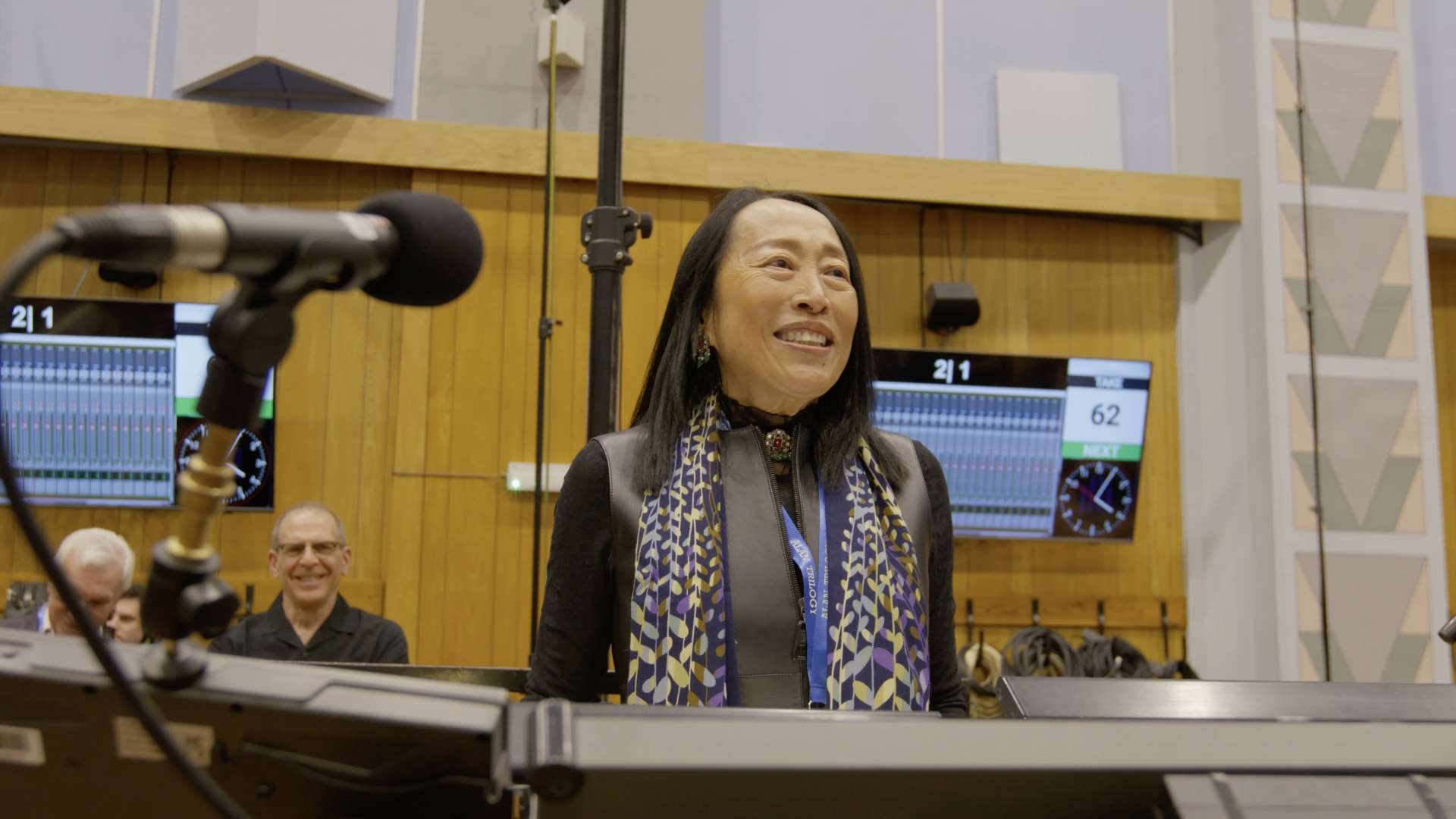
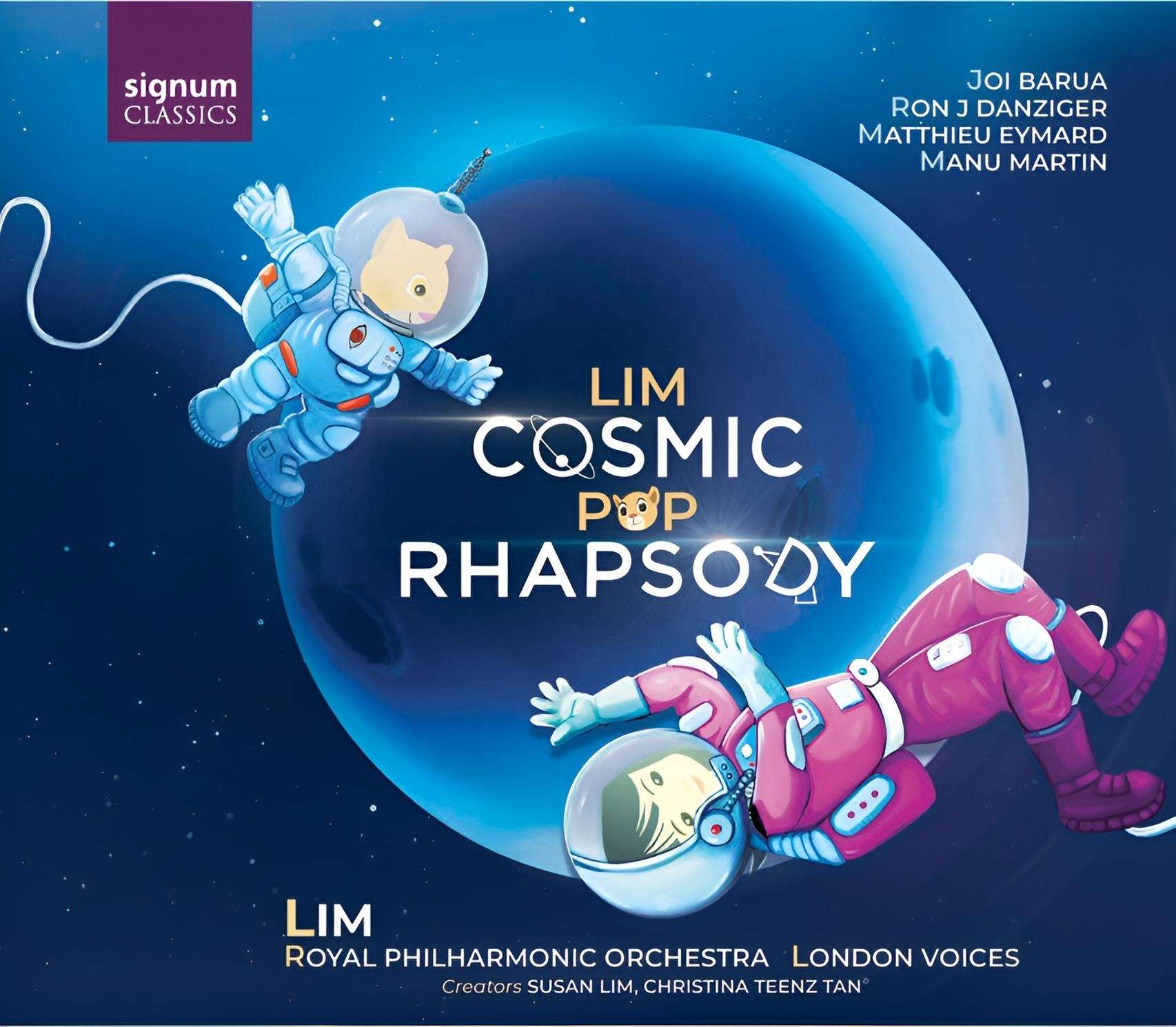
LIM’s Fantasy of Companionship Legacy gathers an orchestral work that has grown across recordings, live performances and animation into a two-disc release on Signum Records.
Created by Susan Lim and Christina Teenz Tan with composer Manu Martin, it uses science-fiction ideas to explore a familiar human need: connection.
Recorded across orchestral, chamber, rock and vocal settings, the project also has a 33-minute animated film by Samudra Kajal Saikia and a visual zoetrope vinyl edition.
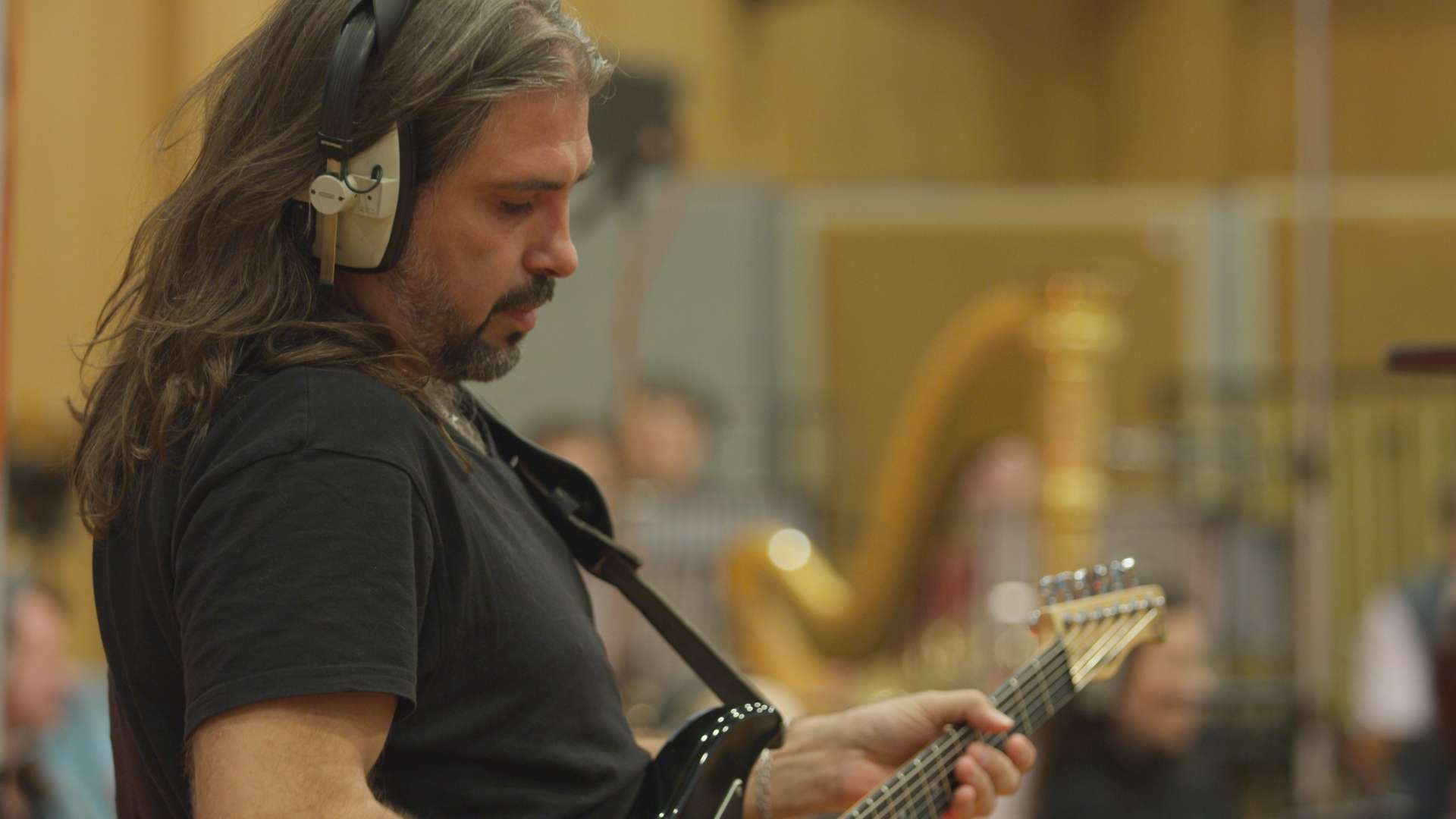
Ahead of a six-city UK tour in 2027, we spoke with Lim (creator, storyteller, lyricist) and lead guitarist and mixing engineer Jérôme Buigues about the music’s evolution, the choices behind its different formats, and where technology belongs in human storytelling.
Science and futuristic themes provide the narrative architecture, but the emotional need for belonging and connection is the true anchor holding it all together. — Susan Lim
Q1. LIM Fantasy of Companionship Legacy connects music, science, technology, and human relationships. What central idea holds this ambitious world together?
The universal desire for connection. In our world, while technology is the modern landscape in which we live, the heart of the exploration remains the search for companionship.
Rather than suggesting machines can ever replace people, the narrative looks at how isolation and longing shape existence, exploring whether empathy and partnership can extend across different realms – between human and inanimate, organic and synthetic.
Science and futuristic themes provide the narrative architecture, but the emotional need for belonging and connection is the true anchor holding it all together.
Q2. How did Susan Lim, Christina Teenz Tan, and Manu Martin combine their different perspectives while shaping the album?
It’s a natural meeting of scientific curiosity, narrative storytelling, and musical composition. Susan and Christina lead the narrative and lyric-writing, drawing on their medical and scientific backgrounds to translate complex concepts- from cellular mechanics and synthetic biology to artificial intelligence- into poetic explorations of existence, entanglement, and the journey of an inanimate creation seeking companionship.
Manu Martin brings the essential musical architecture. As a pianist and composer, he translates those scientific ideas and story arcs into rich harmonic motifs, dynamic orchestral lines, and deeply expressive arrangements. It’s an ongoing conversation where science provides the conceptual spark, and the music gives that story emotional life.
Q3. The project has evolved from its 2019 Abbey Road sessions into orchestral, chamber, rock, and vocal forms. What changed most during that journey?
The musical canvas broadened dramatically, while our creative home and core family remained steadfast. We actually began right at Abbey Road Studios in 2018, recording both pop followed by orchestral elements – and that historic studio has remained our creative anchor through to today.
What changed most was the sheer expansion of the story and the sonic palette, traveling conceptually from earthly companionship out toward cosmic frontiers and the oceans. Along the way, we welcomed wonderful new collaborators: Mark Bebbington stepped into the concertante piano role with incredible touch and vitality, while Tom Ball brought an undeniable vocal strength to the symphonic pop pieces.
The genres hybridized across classical, rock, and pop, but the story of companionship across boundaries never lost its course.
Q4. Two tracks introduce a dedicated rock band into the orchestral score. What did that heavier instrumentation unlock creatively?
Visceral grit and pure kinetic drive. On New World Order, dropping a relentless rhythm section and distorted guitar bite into an orchestral landscape creates a genuine crossover collision – it challenges classical conventions and gives symphonic textures real attitude.
On Teleportation, that rock engine provides the sheer ballistic thrust needed for the climax. It injects a punch and swagger that classical instruments alone can’t replicate, snapping the audience out of passive listening into an arena-sized experience.
Q5. Why did Teleportation become the emotional climax of the work, and what does each of its three versions reveal?
It marks the ultimate breakthrough: quantum entanglement made human, where the boundary between organic life and synthetic intelligence dissolves completely.
The three interpretations trace that journey across cultures and registers:
Matthieu Eymard (Original): Intimate, fragile, and deeply human- capturing the initial tremble and vulnerability of daring to connect with the unknown.
Tom Ball (Symphonic Pop): An unbound, soaring powerhouse that turns the leap into an anthem of cosmic triumph.
Joi Barua (Assamese): A spiritual, acoustic homecoming. Sung in Joi’s native language, it strips away the futuristic chrome to reveal an ancient, universal pulse of longing.
Q6. How did the animated film and Samudra Kajal Saikia’s visual world influence the way the music was composed and experienced?
We flipped the standard cinematic playbook: the music arrived first. Samudra wasn’t following cue sheets; he reacted purely to the melodies, rhythm, and lyrical poetry.
His surreal, hand-drawn aesthetic serves as visual jazz – a visceral translation of our score into a dreamscape of mythical and scientific iconography.
When audiences watch it, they aren’t seeing music score a picture; they’re watching an artist translate sound into light in real time.
Q7. The work has reached sold-out audiences in Singapore, London, and Berkeley. Did each location respond differently to its themes?
The reception was sold out across the board, but each city brought a completely distinctive, unforgettable emotional atmosphere:
Singapore: It took place right as the world was emerging from Covid lockdowns, making it one of the city’s very first live concert experiences after a prolonged period of isolation. The hall was filled with patrons in N95 masks, and Tedd Joselson even performed the entire demanding piano concerto wearing an N95 mask. Yet despite the physical barriers, the emotional release in the room was overwhelming – you could see the smiles behind the masks and feel the pure, rapturous joy of people reconnecting through live music again.
London: Connected deeply with the rich symphonic pedigree and classical crossover craft, embracing the dramatic dialogue between large-scale orchestral tradition and soaring, theatrical vocal power.
UC Berkeley: Brought two back-to-back sold-out houses filled with pure student exuberance. Co-creator Christina Teenz Tan, herself a Berkeley alum, introduced the piece from the stage, connecting directly with the students. Tracks like Off to College and Evil Professor were actually born out of her own college memories there – drawing audible gasps when she teased that an “evil professor” might just be sitting in the hall that night. That youthful, unbridled energy made the performance feel like an exuberant homecoming.
Q8. What can audiences expect from the 2027 UK tour with Mark Bebbington, Tom Ball, and the National Philharmonic Orchestra of Ukraine?
A live experience where classical rigor meets genuine, unfiltered emotion. Mark Bebbington’s piano virtuosity is breathtaking, and Tom Ball brings an arena-sized vocal presence that connects instantly with the hall.
Performing alongside the National Philharmonic Orchestra of Ukraine adds immense soul, dignity, and shared humanity to the stage. It’s classical grandeur reimagined as an epic, modern theatrical journey.
Q9. With the album spanning orchestral recording, animation, and zoetrope vinyl, how did technology help connect its different creative formats?
Technology was simply the practical bridge between different mediums. In the studio, modern audio engineering allowed us to seamlessly weave acoustic orchestral textures with contemporary rhythm sections.
For the visual side, digital tools enabled hand-drawn animation to come alive alongside the score. Even bringing visual art onto the vinyl through a classic optical technique like the zoetrope was just a charming, tangible way to pair modern music with pre-cinema optical art.
Q10. As technology reshapes composition and storytelling, where should innovation support human creativity – and where should artists draw the line?
Technology should always be an instrument in human hands, not the artist behind the canvas. It is an indispensable tool in modern life – it streamlines production, expands sonic possibilities, and allows independent creators to realize ambitious ideas that once required massive studios.
The line is simple: machines cannot replicate lived human experience. A tool cannot feel grief, love, joy, or heartache. Genuine art comes from vulnerability, intent, and shared human emotion.
Innovation should support and amplify the creator’s voice, but it can never replace the human spirit at the heart of the music.
©fm