
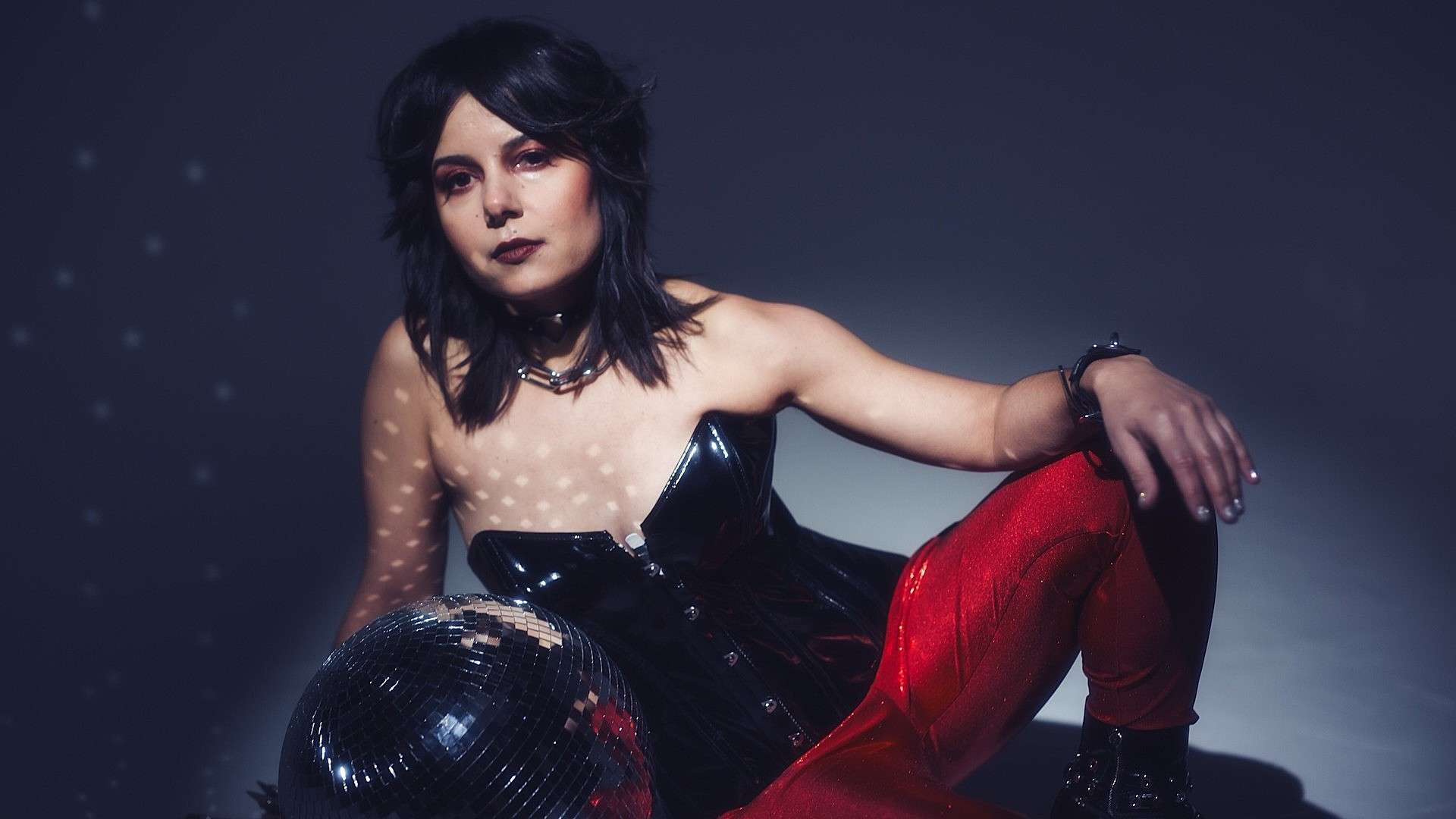
Veronica Bianqui has been recording since childhood, filling boombox tapes in California’s San Fernando Valley with songs, invented radio segments and imaginary talk shows.
That appetite for self-invention runs through Money, where a nursery-rhyme refrain unravels into a confrontation with wealth worship, backed by guitar recordings chopped into glitchy rhythms.
Raised in LA’s garage-rock scene and now based in London, Bianqui toured with The Blank Tapes and Suo before releasing her self-titled 2020 debut, co-produced with Matt Adams, pairing classic pop hooks with loud guitars.
Following personal losses and a move to London, Bianqui completed two postgraduate degrees at Goldsmiths and took greater control of her recording process.
Written over four years, her self-produced second album, Use Once Then Destroy, arrives 13 November via NX Records, populated by obsessive lovers, antiheroes and self-destructive characters.
For this FM PRO Quickfire 5, Bianqui talks dark humour, abandoning self-imposed rules and the hands-on experiments behind the record, from playing bass herself to programming drums and pulling guitar parts apart in Ableton.
Q1. Money moves from a nursery-rhyme refrain into outright confrontation. What did humour let you say about wealth that a straight protest song wouldn’t?
Humour allows me to take things a little less seriously, even when it could otherwise be a heavy matter. I don’t take myself too seriously, so the humour in my songs is my way of reflecting that.
Q2. Use Once Then Destroy features obsessive lovers, antiheroes and self-destructive brats. Which character took you furthest outside your own perspective?
Probably the murder-lover character who you can’t quite tell if she wants to sleep with this person or kill him.
Q3. The album developed over four years after you moved from Los Angeles to London. What changed most in what you wanted from your music during that time?
I gave myself permission to be imperfect and to do things on my terms, ignoring rules and limiting restrictions I had previously made for myself.
Q4. You’ve described giving yourself permission to follow ideas without knowing where they would lead. What made it onto this record that you might have talked yourself out of before?
I played bass on a lot of the tracks. On my first album, I thought I needed an ‘official’ bass (or any instrument besides guitar) player to play individual parts. Also, Money is the first time I’ve used my own drum programming on a song.
Q5. FM PRO TECH: On Money, you chopped your guitar into stuttering, glitchy textures. What tools and techniques helped you turn that recording into a new rhythmic element?
Ableton warp mode- changed the formants, glitched it out, cut, copy, paste, reverse and repeat.
©fm