

Buying new tyres is only part of the process. Once you have selected the correct size, specification and brand, they still need to be fitted safely. The method you choose can influence the final price, the time involved and how convenient the experience is.
For most drivers, the decision comes down to two options: taking the vehicle to a garage or fitting centre, or arranging for a mobile tyre fitter to visit their home or workplace.
Both options can deliver professionally fitted and balanced tyres, but they suit different circumstances. Comparing what each service includes can help drivers avoid unexpected charges while ensuring the work meets the standard required for safe everyday driving.
The specialists at Tyres.co.uk, an online marketplace for car tyres, recommend treating fitting as part of the original tyre purchase rather than an afterthought. The quality of the fitting, balancing and final checks matters just as much as the tyres themselves.
What does garage tyre fitting offer?
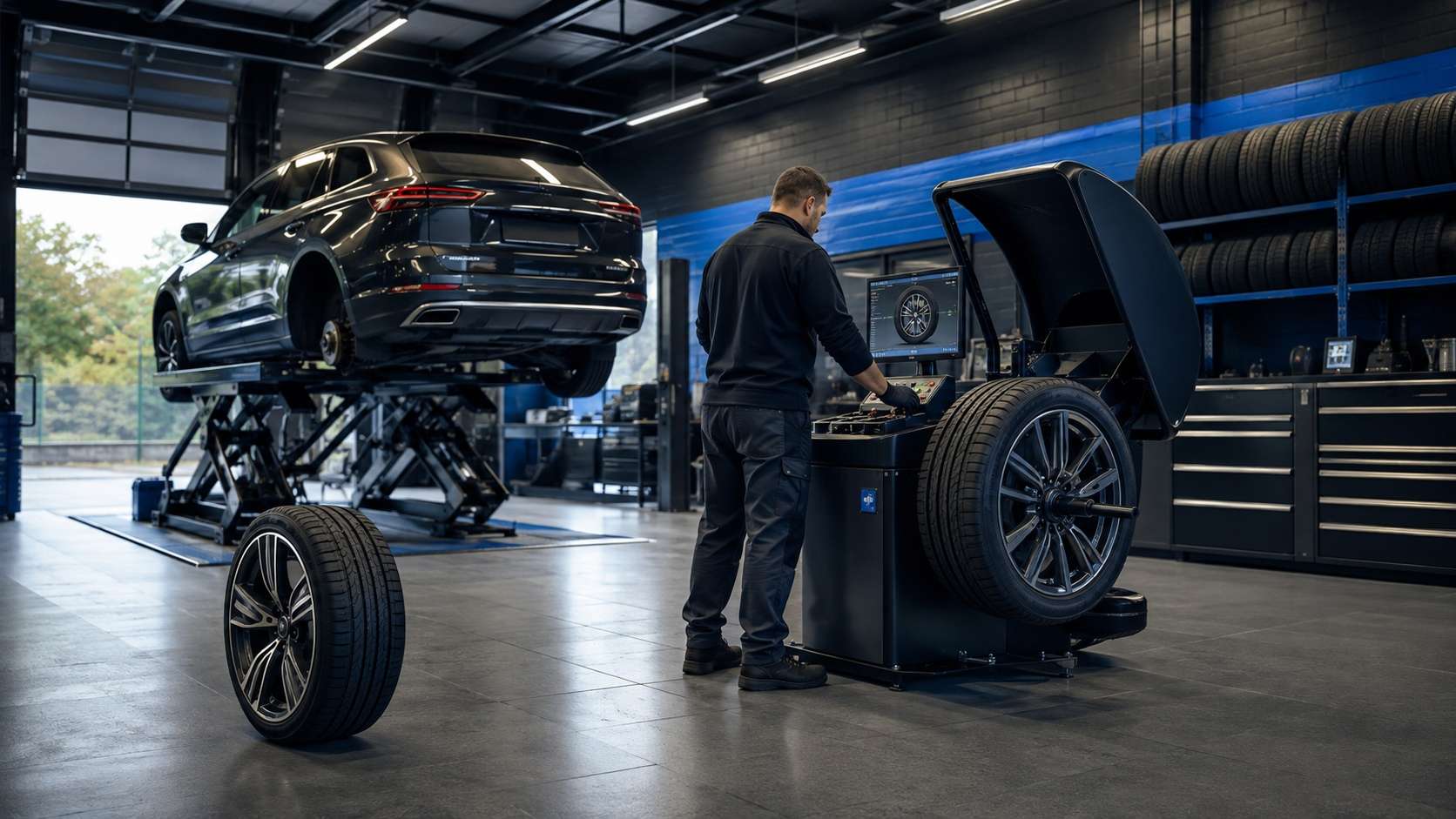
Garage or fitting-centre installation remains the traditional choice. Drivers book an appointment, take the vehicle to the premises and either wait for the work to be completed or leave the car and collect it later.
One of the main advantages is access to a wider range of equipment and services. A fixed fitting centre will usually have specialist machinery available for tyre fitting, wheel balancing and alignment checks.
Wheel alignment is normally charged separately from the standard fitting price. However, if the existing tyres show uneven wear, the vehicle pulls to one side or the steering wheel sits off-centre, visiting a garage makes it easier to have the alignment inspected and corrected during the same appointment.
A garage may also be the more practical option when a vehicle has damaged wheels, difficult locking wheel nuts or another issue requiring equipment that a mobile fitting van may not carry.
The trade-off is convenience. Drivers must reach the fitting centre, fit the appointment around their schedule and potentially wait while the work is completed. This may be manageable for a planned tyre replacement but more difficult if the car is already unsafe or unable to travel.
How does mobile tyre fitting work?
Mobile tyre fitting brings the service directly to the vehicle. A technician visits a driveway, workplace, car park or another suitable location and replaces the tyres while the car remains parked.
For drivers with busy schedules, limited access to a nearby garage or a vehicle that should not be driven on its existing tyres, this can remove much of the disruption associated with replacement.
Modern mobile fitting vans carry dedicated tyre-changing and wheel-balancing equipment. When the work is completed by an experienced technician, the fitting standard should not be lower simply because the service takes place away from a garage.
The main limitation is wheel alignment. Most mobile fitters cannot perform full four-wheel laser alignment at the roadside, meaning a separate garage appointment may still be necessary when tracking or uneven tyre wear is a concern.
The working location also needs to be safe, reasonably level and accessible to the fitting van. Drivers should confirm that their driveway or workplace is suitable when arranging the appointment.
What should a fully-fitted tyre price include?
Whether the work takes place at a garage or through a mobile fitting service, a standard fully-fitted price should generally cover the same essential elements:
- Removal of the existing tyre
- Installation of the new tyre
- Wheel balancing
- A new standard valve
- Disposal of the old tyre
Checking these details makes it easier to compare quotes on a like-for-like basis. A price that initially appears much cheaper may exclude balancing, valves or disposal, with those costs added later.
Wheel alignment is not normally part of the standard fitting package and should be budgeted for separately when required. Some vehicles fitted with tyre-pressure monitoring systems may also attract an additional valve or servicing charge, so this should be confirmed before booking.
Tyres.co.uk advises drivers to focus on the total fully-fitted price rather than the first figure displayed. The difference between garage and mobile fitting is often modest, but costs can vary according to tyre size, location, appointment time and the number of tyres being replaced.
Check the tyre size and specification
Fitting is also the final opportunity to confirm that the new tyres are correct for the vehicle. Tyre size is printed on the sidewall in a format such as 205/55 R16, followed by load and speed ratings.
Every part of that specification matters. Two tyres can share the same basic dimensions while having different load capacities or speed ratings, making it important to compare the complete code with the vehicle manufacturer’s requirements.
The sidewall also contains a four-digit date code showing the week and year in which the tyre was produced. For example, a code ending in 2526 would indicate that the tyre was manufactured during the 25th week of 2026.
UK tyre labels provide additional information about wet grip, fuel efficiency and external rolling noise. These ratings allow drivers to compare performance and running costs rather than making a decision based entirely on the purchase price.
Whether the tyres are fitted at a garage or by a mobile technician, the fitter should confirm the size and specification before beginning the work.
Why tyre tread still matters
The legal minimum tread depth for cars in the UK is 1.6mm across the central three-quarters of the tyre and around its complete circumference.
Driving with an illegal tyre can result in a fine of up to £2,500 and three penalty points for each affected tyre. Four illegal tyres could therefore carry significantly greater financial and licence consequences.
Safety organisations including TyreSafe advise motorists to consider replacement when tread depth approaches 3mm, particularly because wet-weather performance can deteriorate as the available tread reduces.
The 20p test provides a quick initial check. Insert a 20p coin into several of the tyre’s main tread grooves. If the outer band of the coin is hidden, the tread is likely to be above the legal minimum. If the band remains visible, the tyre should be measured more accurately and inspected by a professional.
The test is only a guide. Drivers should also look for cuts, bulges, cracking, exposed cords, uneven wear and objects embedded in the rubber. A tyre can still be unsafe even when its tread remains above 1.6mm.
Promptly replacing worn or damaged tyres is essential. Delaying the work can increase stopping distances, reduce wet-weather grip and raise the risk of aquaplaning. Driving on an illegal tyre can also leave the motorist facing penalties that cost considerably more than replacement.
Mobile or garage: how to decide
- Request a fully-fitted price covering fitting, balancing, a new valve and disposal.
- Check whether wheel alignment is required and confirm its separate cost.
- Match the complete tyre size and specification to the vehicle.
- Compare wet-grip, fuel-efficiency and noise ratings.
- Choose mobile tyre fitting when time is limited or the vehicle should not be driven.
- Choose a garage when alignment or more complex wheel work may be required.
- Consider replacing tyres as they approach 3mm rather than waiting for the legal limit.
- Confirm any additional charges before completing the booking.
There is no single fitting method that will suit every driver. A garage offers wider access to equipment and makes sense when wheel alignment or additional mechanical checks are required. Mobile fitting provides greater flexibility and can be particularly useful when a vehicle is off the road or the owner cannot easily reach a fitting centre.
Comparing car tyres and fitting options becomes easier when the full cost is visible from the beginning. Tyres.co.uk allows motorists to buy car tyres online, view fully-fitted prices and select either a local fitting centre or mobile tyre fitting according to availability.
The best choice ultimately depends on the condition of the vehicle, the services required and the driver’s schedule. What matters is that the tyres are correctly specified, professionally fitted and properly balanced.
Whether the work happens on a driveway or inside a fitting centre, the objective remains the same: safe and legal tyres, fitted correctly, with a final price understood before the booking is confirmed.