

Power banks have become essential gear for anyone who relies on their devices throughout the day. However, traditional power banks come with real drawbacks, such as overheating, shorter lifespans, and safety concerns.
Solid-state power banks use solid electrolytes instead of liquid ones, which makes them safer, longer-lasting, and more efficient than regular options.
The technology behind solid-state batteries represents a significant step forward in portable charging. These devices can store more power in a smaller space while lasting twice as many charge cycles as traditional models. For travelers and daily users alike, this means less worry about device safety and fewer replacements over time.
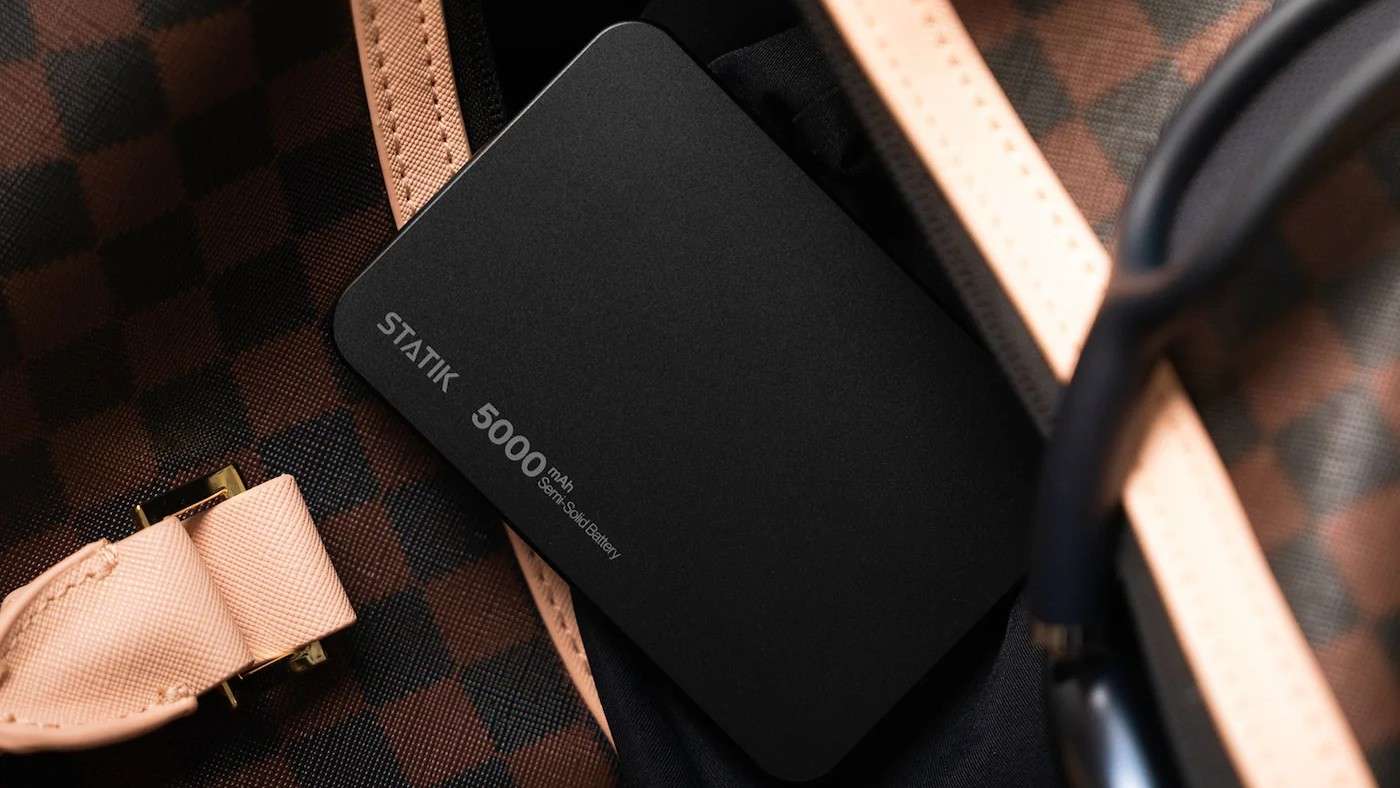
For everyday users who value reliability over gimmicks, solid-state power banks signal a smarter shift in portable charging. Options like solid state battery power bank from Statik, alongside other compact solid-state chargers, prioritise safety, longevity, and efficiency — solving the overheating, short lifespans, and inconsistency that haunt traditional power banks. It’s less about raw specs, more about power that works quietly and predictably in real life.

Key Takeaways
- Solid-state power banks offer better safety and can last over 1,000 charge cycles compared to 500 in traditional models
- These power banks store more energy in smaller packages and perform better in different temperatures
- The new technology reduces overheating risks and provides TSA-approved safety for travel
Core Advantages of Solid-State Power Banks Over Regular Ones
Solid-state power banks deliver significant improvements in safety, storage capacity, speed, and lifespan compared to traditional lithium-ion models. These benefits result from using solid electrolytes rather than liquid ones.
Enhanced Safety through Solid Electrolytes
Solid electrolytes replace the liquid electrolytes found in regular lithium-ion batteries. This change eliminates the risk of leakage and significantly reduces fire hazards.
Traditional power banks rely on liquid electrolytes that can leak, overheat, or become volatile under stress. Solid-state battery tech removes that risk entirely. With non-flammable solid electrolytes, stability comes built in — even when the battery is pushed hard or takes a knock.
Thermal performance is the real flex. Solid electrolytes handle higher temperatures without breaking down, which means safer charging in hot cars, direct sun, or long travel days. Less risk, more confidence — power that stays cool when life doesn’t.
The solid electrolyte also prevents dendrite growth, which can form inside batteries. In regular batteries, dendrites can pierce the separator between battery components, causing short circuits. Solid materials block this process, keeping the battery safer throughout its life.
Superior Energy Density and Compact Designs
Higher energy density is one of the most significant advantages of solid-state power banks. These devices store more power in less space compared to regular options.
Energy density measures how much energy fits into a given size or weight. Solid-state batteries pack more energy into the same volume as traditional batteries. This means manufacturers can create smaller power banks that hold the same charge, or larger units that store much more power.
A typical solid-state power bank is 20-30 % smaller than a regular one with the same capacity. Users get a lighter device that fits more easily in pockets or bags. For people who travel often or carry power banks daily, this size difference matters a lot.
The compact design also benefits from improved overall battery performance. Solid-state battery technology allows for thinner cells and more flexible shapes. This gives designers more options for creating power banks that meet specific needs or preferences.
Faster Charging and Improved Efficiency
Solid-state power banks support faster charging speeds for both the power bank itself and the devices it charges. The solid electrolyte conducts ions more efficiently than liquid alternatives.
Fast charging capability comes from the improved ion movement within solid materials. Ions can travel through certain solid electrolytes with less resistance than through liquid electrolytes. This means the battery accepts and delivers power more quickly.
Users spend less time waiting for their power banks to recharge. A solid-state model might fully charge in 30-45 minutes, while a traditional one could take 2-3 hours. This speed advantage makes the device more practical for busy schedules.
Temperature tolerance also improves with solid-state designs. These power banks maintain good performance across a broader temperature range. Cold weather significantly slows down regular batteries, but solid-state batteries perform better in both hot and cold conditions. Battery performance stays more consistent regardless of the environment.
Longer Battery Lifespan and Durability
Solid-state power banks last through many more charge cycles than regular lithium-ion batteries. This extended lifespan saves money and reduces electronic waste over time.
Charge cycles measure how many times a battery can be charged and discharged before its capacity drops significantly. Traditional lithium-ion batteries typically undergo 300-500 complete charge cycles before losing about 20% of their capacity. Solid-state batteries can endure 1,000-3,000 cycles or more before similar degradation occurs.
A longer lifespan means users can keep their power banks for years rather than replacing them every 12-18 months. The solid electrolyte resists degradation better than liquid electrolytes do. It doesn’t break down as quickly from repeated use or exposure to heat.
Battery life improves because solid materials prevent many of the chemical reactions that damage regular batteries. The solid structure maintains its integrity over time. Users get reliable power for much longer, which makes the higher initial cost worthwhile for many people.
Wider Applications and Future Potential
Solid-state power banks extend beyond simple phone charges to transform multiple technology sectors. These devices prove valuable in consumer electronics today and promise to reshape electric vehicles and broader energy markets tomorrow.
Suitability for Consumer Electronics and Smartphones
Solid-state power banks are quietly rewriting what portable power looks like. Phones burn through battery faster than ever, and everyday users need chargers that can keep up without adding bulk. Thanks to higher energy density, solid-state designs pack more power into smaller, cleaner builds than traditional lithium-ion alternatives.
By ditching liquid electrolytes for solid ones, these power banks cut out many of the overheating and wear-and-tear issues tied to older models. The payoff is safer, steadier charging — from phones and tablets to laptops and earbuds — with power delivery that stays smooth, even when you’re pushing your devices hard.
Longevity is where the upgrade really hits. Solid-state batteries keep their capacity through thousands of charge cycles — fewer replacements, less waste, better value over time. Add fast-charge performance and you’ve got portable power built for real life: constant movement, heavy use, and absolutely zero patience for a dead device.
Impact on Electric Vehicles and Emerging Technologies
Electric vehicles stand to gain substantially from the development of solid-state batteries. The same technology that improves power banks could revolutionize how EVs store and use energy. Higher energy density translates to extended range without added weight. Faster charging times reduce wait times at stations.
Safety improvements matter even more in automotive applications. Solid-state batteries resist thermal runaway better than liquid electrolyte versions. This feature addresses one of the main concerns that holds back EV adoption.
Grid storage systems and renewable energy projects also need better battery solutions. Solid-state technology offers the stability and lifespan required for large-scale energy storage. The lessons learned from portable chargers help engineers develop bigger applications. Each advancement in small devices pushes the entire industry forward.
Technological Progress and Future Market Trends
Research teams continue to solve manufacturing challenges that limit production. Costs remain higher than those of traditional batteries, but prices drop as production scales up. Several facilities now work to produce solid-state cells at competitive rates.
The power bank market serves as a testing ground for broader applications. Companies refine their designs through consumer products before they tackle larger projects. This approach reduces risk and accelerates development timelines.
Market analysts expect solid-state technology to capture a significant share of the portable power products market over the next five years. Early adopters are willing to pay premium prices for better performance and safety. As production methods improve, mainstream consumers will access these benefits. The technology bridges current needs and future possibilities across multiple sectors.
Conclusion
Solid-state power banks mark a clean break from ageing battery tech. Safer by design and denser in energy, they deliver longer life, steadier performance under pressure, and far fewer risks than traditional lithium-ion models.
For anyone relying on portable power day in, day out, solid-state isn’t hype — it’s a practical upgrade in how devices stay charged.